
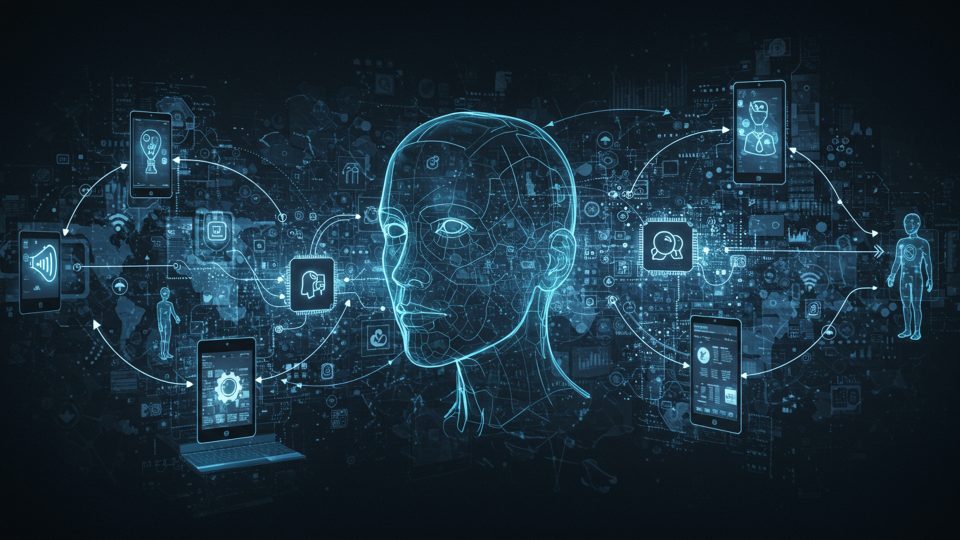
Imagine a bustling airport. Thousands of passengers, planes, and schedules operate in perfect synchrony, thanks to an unseen network of systems that adapt in real time—rerouting flights, reallocating gates, and alerting staff before problems arise. This choreography doesn’t happen by chance; it’s driven by intelligence that perceives, decides, and acts continuously.
That’s precisely what the concept of an intelligent agent in Artificial Intelligence (AI) embodies—a system capable of sensing its environment, making informed choices, and taking actions that optimise outcomes. Rather than thinking of AI as a magic black box, envision it as a team of smart assistants quietly coordinating complex decisions behind the scenes.
The Mindset of an Intelligent Agent
An intelligent agent isn’t about raw computational power—it’s about purposeful decision-making. Think of it as a digital explorer navigating an unfamiliar terrain. Each observation is a clue, each action an attempt to move closer to its goal. The art lies not in reacting blindly, but in learning and adapting over time.
For instance, consider an e-commerce recommendation engine. It observes your browsing habits, analyses patterns, and adapts suggestions with each click. Over time, it develops an understanding of your preferences—just like a shopkeeper who remembers what you liked last time.
Learners diving into this fascinating domain can explore its depth through structured programmes such as an artificial intelligence course in Hyderabad, where they learn how intelligent agents blend perception, reasoning, and learning to make systems smarter and more human-like.
Building Systems That Think for Themselves
Designing intelligent systems isn’t about coding alone—it’s about creating frameworks that reason and respond. Every AI-driven solution starts by defining the agent’s environment and understanding how it perceives that environment through data.
For example, self-driving cars act as autonomous agents navigating roads filled with unpredictable human drivers, traffic lights, and pedestrians. They must process sensory data in milliseconds and make precise, life-critical decisions.
The brilliance of an intelligent agent lies in its ability to balance immediate reactions (reflexes) with strategic foresight (planning). Developers build feedback loops so that agents not only respond to current states but also anticipate future scenarios, constantly fine-tuning their actions.
Learning from Experience: The Core of Intelligence
No agent starts perfectly intelligent—it learns through experience, much like humans. Reinforcement learning, a cornerstone of modern AI, captures this process beautifully. Agents are rewarded for good decisions and penalised for poor ones, gradually refining their strategies to maximise long-term success.
Think of how streaming platforms personalise content. Initially, they make broad guesses, but as users interact more, the system refines its recommendations. Behind the scenes, algorithms weigh every action—clicks, skips, and ratings—to craft a better understanding of what “satisfaction” means for each individual.
Students who enrol in an artificial intelligence course in Hyderabad often engage with projects where reinforcement learning and intelligent agents come together—solving problems from game design to supply chain optimisation. It’s not just theory; it’s the practice of teaching machines to learn as humans do, by trial, feedback, and adaptation.
Ethics and Human Oversight
With autonomy comes responsibility. Intelligent systems influence hiring decisions, credit approvals, and even medical diagnoses. The challenge isn’t only about building smarter systems but fairer ones.
Developers must ensure transparency, interpretability, and fairness in their designs. Intelligent agents should be guided by ethical boundaries—knowing not just what they can do, but what they should do.
This balance between autonomy and accountability defines the next era of AI development, where trust is as crucial as innovation.
Conclusion
Intelligent agents aren’t the future—they’re already here, orchestrating everything from ride-sharing routes to financial fraud detection. The key to designing truly smart systems lies in understanding their essence: perception, reasoning, learning, and ethical responsibility.
Like the airport’s unseen coordination, intelligent agents quietly keep the digital world running smoothly. For professionals entering this transformative field, mastering the principles of intelligent agents can open doors to innovation that mirrors human intuition—and often surpasses it.
Through disciplined learning, experimentation, and creative application, tomorrow’s AI architects can craft systems that don’t just process data—but understand it, act on it, and evolve with it.
